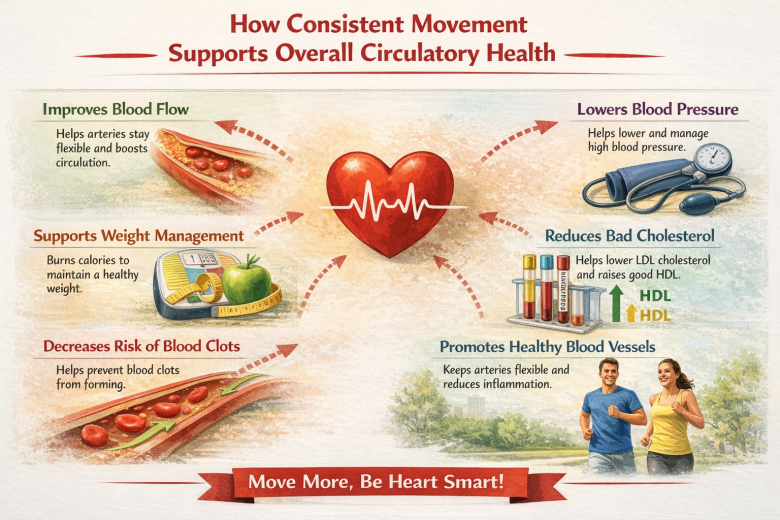
How Consistent Movement Supports Overall Circulatory Health
Regular movement is one of the most accessible lifestyle habits that supports general well-being. Physical activity does not require advanced training or expensive equipment—simple, consistent routines can contribute positively to daily health.
Why Movement Matters
The circulatory system works continuously to deliver oxygen and nutrients throughout the body. Engaging in regular physical activity supports healthy circulation and overall physical resilience.
Activities that raise the heart rate moderately—such as brisk walking, cycling, swimming, or dancing—are commonly recommended as part of a balanced lifestyle.
Walking: A Simple Starting Point
Walking is often considered one of the most sustainable forms of exercise. A 20–30 minute brisk walk most days of the week can help:
- Support energy levels
- Improve mood
- Encourage better sleep
- Maintain overall fitness
For beginners, starting with shorter sessions and gradually increasing duration can make the routine manageable.
Strength Training and Flexibility
While cardiovascular activities are important, strength training and flexibility exercises also contribute to balanced fitness. Light resistance training helps maintain muscle mass, which supports metabolism and physical stability. Stretching or mobility work improves joint comfort and posture.
A well-rounded weekly routine may include:
- 3–5 days of moderate aerobic activity
- 2 days of strength training
- Gentle stretching or mobility exercises
Staying Consistent
Consistency matters more than intensity. Choosing activities that are enjoyable increases the likelihood of maintaining them long term. This could include group classes, outdoor sports, or at-home workouts.
Setting realistic goals, tracking progress, and building movement into daily life—such as taking the stairs or standing breaks during work—can make activity part of a routine rather than a task.
Before beginning a new exercise program, individuals with existing medical conditions should consult a healthcare professional.