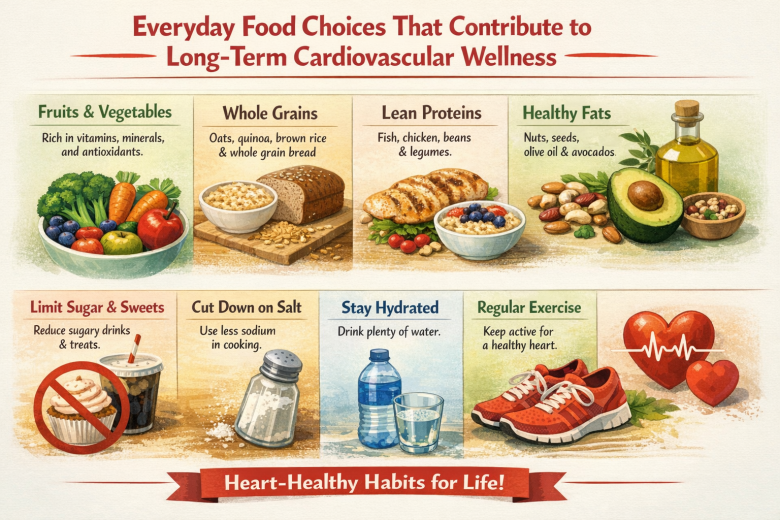
Everyday Food Choices That Contribute to Long-Term Cardiovascular Wellness
Maintaining cardiovascular wellness is not about following extreme diets or eliminating entire food groups. Instead, it often comes down to consistent, balanced eating patterns that support the body over time. While individual nutritional needs vary, adopting sustainable food habits can play a meaningful role in overall well-being.
Focus on Whole Foods
Whole foods such as vegetables, fruits, legumes, whole grains, nuts, and seeds provide fiber, vitamins, minerals, and plant compounds that support general health. Meals centered around minimally processed ingredients tend to contain less added sodium, sugar, and unhealthy fats.
For example, replacing refined grains with whole grains like oats, quinoa, or brown rice increases fiber intake. Fiber contributes to digestive health and helps maintain balanced nutrition patterns.
Choose Fats Wisely
Not all fats are the same. Unsaturated fats found in foods like olive oil, avocados, nuts, and fatty fish are commonly included in heart-conscious eating patterns. At the same time, many health organizations suggest limiting excessive intake of saturated fats and avoiding trans fats when possible.
Simple adjustments—such as baking instead of frying or using olive oil instead of butter in certain dishes—can make a difference over time without drastically changing your diet.
Be Mindful of Sodium Intake
Sodium is present in many packaged and restaurant foods. While the body needs some sodium, excessive consumption may not align with general wellness recommendations. Cooking at home more often, reading nutrition labels, and flavoring meals with herbs and spices instead of salt are practical strategies.
Balance and Portion Awareness
Balanced meals often include a mix of:
- Lean proteins
- High-fiber carbohydrates
- Healthy fats
- A variety of colorful vegetables
Rather than focusing on strict restrictions, portion awareness and moderation support long-term sustainability.
Hydration Matters
Water plays a key role in overall health. Staying properly hydrated supports circulation, digestion, and energy levels. Replacing sugar-sweetened beverages with water or unsweetened herbal teas can be a simple improvement.
Building Sustainable Habits
Consistency is more impactful than perfection. Planning meals ahead of time, preparing healthy snacks, and gradually introducing nutritious alternatives can help maintain long-term dietary balance.
This information is intended for educational purposes and does not replace personalized guidance from a qualified healthcare professional.