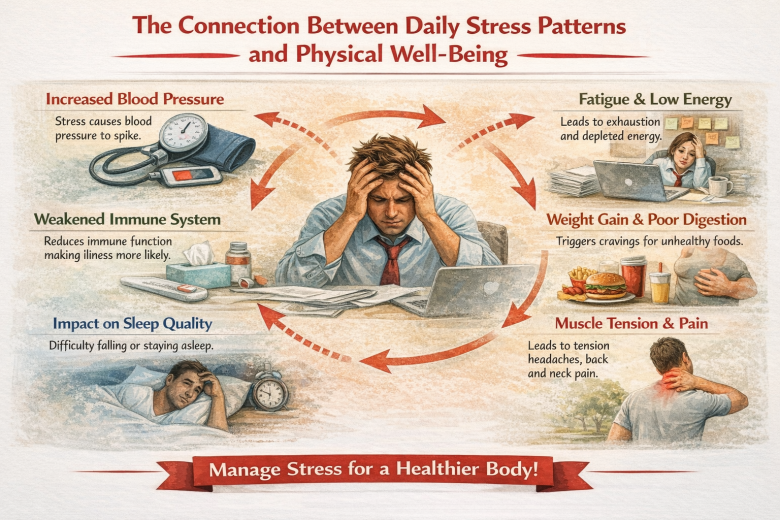
The Connection Between Daily Stress Patterns and Physical Well-Being
Modern lifestyles often involve ongoing responsibilities, digital exposure, and demanding schedules. While occasional stress is a normal part of life, chronic stress may influence overall well-being if not managed effectively.
Developing healthy coping strategies supports both mental and physical balance.
Understanding Everyday Stress
Stress activates natural physiological responses designed to protect the body in challenging situations. However, when stress becomes constant, it may influence sleep patterns, energy levels, and lifestyle choices.
Becoming aware of stress triggers is the first step toward healthier responses.
Prioritizing Restful Sleep
Quality sleep is essential for recovery and overall health. Establishing consistent sleep habits may include:
- Maintaining a regular bedtime schedule
- Limiting screen exposure before sleep
- Creating a calm sleeping environment
- Avoiding heavy meals late at night
Restful sleep supports emotional regulation and daytime performance.
Mindfulness and Relaxation Techniques
Practices such as deep breathing, meditation, journaling, or gentle yoga can help promote relaxation. Even a few minutes per day dedicated to intentional breathing may support mental clarity.
Spending time outdoors, engaging in hobbies, or connecting socially also contributes to emotional balance.
Work-Life Balance and Boundaries
Setting realistic boundaries between work and personal life can reduce unnecessary pressure. Scheduling short breaks, organizing tasks effectively, and communicating clearly about responsibilities help prevent overwhelm.
Building Sustainable Daily Habits
Small, consistent changes often lead to better long-term outcomes than dramatic lifestyle shifts. For example:
- Taking brief walking breaks during work
- Preparing meals in advance
- Practicing gratitude
- Reducing excessive news or social media exposure
These habits support overall wellness without requiring drastic measures.
As always, individuals experiencing persistent stress or emotional difficulties should consider speaking with a qualified healthcare professional.